
CROATIA FOR PEOPLE WITH REDUCED MOBILITY
You will find in the sections above general information but also more specific to the destination.
The places and service providers offering an accessible service or activity are referenced on the interactive map. By clicking on the landmark, you obtain information related to their accessibility as well as their coordinates. It is possible to use filters to refine your searches. So you can filter by region, by cities, by type of place, by need in terms of accessibility.

Maximum occupancy in accommodation

Number of steps

Toilets for the disabled

Accessible cloakroom

Assistance

Walk-in shower with shower chair

Adjusted sink

Ramp

Ramp or water lift

Deckchair (free or rented)

Grab bar next to the toilets
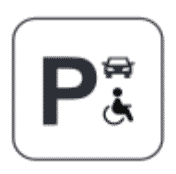
Parking space for the disabled

Only the terrace is accessible

All-terrain wheel recommended (Freewheel type)
This guide is a concentrate of useful information. The pictograms fit into this logic to get straight to the point. The absence of a pictogram means that the place is accessible, that there are no obstacle to the visit. To see from the outside means the site is not wheelchair accessible. Some sites listed have obstacles. They nevertheless worth a visit but require assistance.
Few figures
- Country born from the break-up of Yugoslavia in 1991
- 4,076,246 residents in 2019
- 131,957 km² of area, or just under a quarter of metropolitan France
- 5,835 km of coast
- 18.5 million visitors in 2018
- Average monthly salary: 6,104 kunas or almost 993 US dollars
Climate
Labore magna deserunt veniam nulla aute do anim enim. Ut aliqua ea cupidatat. Anim reprehenderit aliquip exercitation eiusmod elit adipisicing sit elit cillum. Ut non enim ut aute consectetur tempor ullamco elit. Dolor dolor officia excepteur est dolor. Irure amet culpa enim Lorem est anim duis deserunt.
Currency and exchange rate
The local currency is the Kuna.
- 1 American Dollar = 6,16 Kunas
- 1 Australian Dollar = 4,69 Kunas
- 1 Canadian Dollar = 4,81 Kunas
Important phone numbers
- Australian embassy ,office hours: +385 4891 200 In case of emergency out office hours: +385 4891 200
- Canadian embassy: +385 488 1200 or +385 488 1238
- United States of America embassy, office hours: +385 661 2200
- International dialing code for Croatia: +385
- Single european emergency call number: 112
- Urgences médicales : 194
- Sapeurs-pompiers : 193
- Police : 192
Indispensable documents
- Valid identity card or passport
- Disability card
- Parking card for people with disabilities
- Driving license
- Prescription for medical treatments
Visa
Croatia is a member of the European Union but is not part of the Schengen area. EU citizens can move freely without a visa. United States, Australian, Canadian ad UK citizens can visit Croatia without a visa for a stay up to 90 days.
Check if you need a visa on the following website: www.mvep.hr/en/consular-information/visas
Health
It is advisable to be up to date with your vaccinations.
The rules for access to the territory in relation to the Covid change regularly, it is advised to consult the website of the embassy of your origin country in Croatia.
If you are an European Union resident, remember to apply for your European health insurance card. It will allow you, in the event of an unexpected health problem, to have access to health professionals and hospitals in the country visited at the same price.
Some bank cards include insurance that can cover unexpected medical expenses. I advise you to inquire. You can take travel insurance to cover unforeseen medical costs, but also loss or theft of luggage, reimbursement in the event of cancellation of the trip, etc.
Accommodation
As the offer is quite limited, it is recommended to book early to have as much choice as possible among accessible accommodation and to obtain advantageous rates (many hotels are carrying out advance booking campaigns).
Electricity
Voltage and frequency in Croatia are the same as in Australia and the UK (230V, 50Hz). So you can use all your devices only with an adaptor. Americans and Canadians will need to use an adaptor. Check your devices: if they do not have the words ‘INPUT: 100-240V, 50/60 Hz’ you will need a transformer.
Airport
Croatia has several international airports: Dubrovnik, Rijeka, Split, Pula, Zadar, Zagreb. hey are equipped to accommodate people with reduced mobility.
Assistance at the airport
If you choose to fly, remember to ask for assistance no later than 48 hours before your trip. is service is free for anyone with reduced mobility. It allows you, depending on your needs, to benefit from a companion to move around the terminals, to check-in and check-in your luggage, to get to the plane, to embark, to settle on board, but also to leave the plane, collect your luggage and accompany you out of the airport.
Ferry and Catamaran
Jadrolinija is the main ferry company in Croatia.
It provides three types of connection:
- Internationals,
- Local, between the big cities of the coast,
- Coastal, between cities and islands or the islands themselves.
The crossing can be done by ferry for all types of vehicles as well as bicycles. And by catamaran for pedestrians only.
You have to:
- Buy your tickets before getting on the ferry,
- You present 1 to 1 hour and a half before departure in high season (July-August),
- But only 30 to 45 minutes in low season.
Some ferries and catamarans are fully accessible, others only have access to the passenger platform. Some have no access, in which case the staff is there to help you if needed.
For any information, you can contact the company at:
- +385 51 666 111
- passdept_e@jadrolinija.hr
Train
The Croatian Railway Company (HŽPP) provides access to some of the cities featured in this guide: Zagreb, Osijek, Zadar, Šibenik and Split.
Some trains are fully accessible, but others require assistance. If you want to travel by train, it is essential to contact the company at least 48 hours before the trip to ensure that assistance is booked.
You can contact the company at:
- +385 1 378 2583
- informacije@hzpp.hr
- www.hzpp.hr
Car rental
No car rental company has accessible vehicle to this day.
Ragusa travel offers an accessible vehicle and driver service with a lifting platform.
You can contact them at:
- info@accessiblecroatia.com
- +385951965425
Driving in Croatia
Car insurance:
- Check your green card for being well covered in Croatia.
- If necessary, you can take out transit insurance at the border post, for around 50 euros.
Traffic Laws:
- Right-hand drive.
- The speed limit is 130 km/h on highways, 110 km/h on expressways, 90 km/h on roads and 50 km/h in town.
- The tolerated blood alcohol level is 0.50 g/l, but 0 g/l for those under 25.
- It is compulsory to have a reflective vest per person in the vehicle as well as a first aid kit.
In the event of a crash:
- Wait for the arrival of the police (contact: 192), their presence is imperative to complete the report. Do not leave, you will risk a fine of 1000 euros.
- It is best to contact the embassy in your home country.
Parking
You are allowed to park in a parking lot for the disabled if you have a parking card for people with disabilities. Parking is not always free but depends on city policy.
Baska
Baška is a seaside resort located in a pretty bay surrounded by mountains. Its semi circle beach is one of the main attractions.
Recommended visit time: 1 day
How to get there:
Ferry:
- Lopar (Rab Island) - Valbriska (Krk Island)
Bridge:
- Šmrika (Continent) - Omišalj (Krk Island)
Streets: The profile of the city is flat, next to the beach. The rest of the city is on the hillside. Pavers are comfortable for wheelchairs users except on the pier, which has very uneven pavers.
Dubrovnik
Dubrovnik is one of the many fortified cities surrounded by the sea in Croatia. is a well-preserved museum-like town, which also hosted the filming of some scenes from the Game of Thrones tv show. You will enjoy its Mediterranean style, its narrow streets and its architecture.
Recommended visit time: 2 days
How to get there:
Catamaran:
- Hvar (Hvar Island) - Dubrovnik (Continent)
- Korčula (Korčula Island) - Dubrovnik (Continent)
- Split (Continent) - Dubrovnik (Continent)
Public transport: city buses are accessible.
Streets: The cobblestones are slick so moving around is easy. Two parts of the city are inaccessible due to too many steps: the northern and southern ends of the fortified city.
Additional information : The Dubrovnik Multiple Sclerosis Society can help you to access inaccessible parts of the city or monuments by providing a transporter to assist you.
Contact:
- dms_dubrovnik@sdmsh.hr
- +385 98 915 2834
Hvar
The island of Hvar is the sunniest and most touristic island of the country’s islands. The city of the same name is the summer meeting place for the jet set. There is a vibe that I have not found anywhere else in Croatia.
Recommended visit time: 1 day
How to get there:
Catamaran:
- Dubrovnik (Continent) - Hvar (Hvar Island)
- Korčula (Korčula Island) - Hvar (Hvar Island)
- Split (Continent) - Hvar (Hvar Island)
Ferry:
- Drvenik (Continent) - Sućuraj (Hvar Island)
- Split (Continent) - Stari Grad (Hvar Island)
Streets: The city relief does not facilitate the visit if you are a wheelchair user and much of the city will be inaccessible to you due to a large number of steps. The cobblestones are slick so moving is easy.
Korcula
Korčula is a medieval fortified town, partially accessible. The rumour has it this city is the famous traveler Marco Polo’s birthplace. It is a condensed Croatia, a beautiful city steeped in history, turquoise waters, good gastronomy and good wine.
Recommended visit time: 2 days
How to get there:
Catamaran:
- Dubrovnik (Continent) - Korčula (Korčula Island)
- Hvar (Hvar Island) - Korčula (Korčula Island)
- Split (Continent) - Korčula (Korčula Island)
Ferry:
- Orebić (Continent) - Dominče (Korčula Island)
- Split (Continent) - Vela Luka (Korčula Island)
Streets: The heights of the city are only accessible by taking stairs. he cobblestones are regular, which makes it easy to move around.
Krk
The town of Krk is pleasant to visit. Its narrow cobbled streets, arches and Roman fortifications make it an ideal destination for a day.
Recommended visit time: 1 day
How to get there:
Ferry:
- Lopar (Rab Island) - Valbriska (Krk Island)
Bridge:
- Šmrika (Continent) - Omišalj (Krk Island)
Streets: The profile of the city is flat and strolling is easy thanks to a regular pavement.
Osijek
The capital of Slavonia is not very touristy, however it deserves to be visited. Its 18th century Baroque citadel is extremely well preserved as is the rest of the city. There is a very beautiful natural park and magnificent monuments.
Recommended visit time: 2 days
Public transport: city buses are accessible, unlike trams.
Streets: The city is relatively flat. The pavers are slick and regular. In the Tvrđa district, the pavement is less comfortable but quite accessible.
Pag
It is a nice discovery with turquoise waters and lunar landscape due to the wind, which prevents any vegetation from growing. Pag is rather family-oriented and not very touristy.
Recommended visit time: 1 day
How to get there:
Catamaran:
- Novalja (Pag Island) - Rab (Rab Island)
Ferry:
- Prizna (Continent) - Žigljen (Pag Island)
Bridge:
- Rtina (Continent) - Miškovići (Pag Island)
Streets: The pavement is regular and the city relief is relatively flat, which makes it easy to move around.
Peljesac Peninsula
This little touristy destination is ideal for taking a few days off to enjoy the beach and the view of the Dinaric Alps.
Recommended visit time: 2 days
How to get there:
Ferry:
- Dominče (Continent) - Orebić (Korčula Island)
- Ploče (Continent) - Trpanj (Continent)
Streets: Moving is easy thanks to a regular pavement and a flat relief next to the sea.
Plitvice
Plitvice National Park is a true wonder, but the accessibility is extremely limited if you use a wheelchair. I advise you to stop there only if you are nearby.
Recommended visit time: few hours
Primosten
Known as the Adriatic pearl, Primošten is a small medieval fishing village. It has kept all its authenticity of yesteryear. You will have a great day there for sure. I was pleasantly surprised by the existing infrastructure for people with reduced mobility on such a small peninsula.
Recommended visit time: 1 day
Streets: The pavement is slick and regular, moving is easy. The peninsula is overhanged by a hill whose top is inaccessible. However, the beginning of the peninsula is flat, as is the rest of the city.
Pula
The capital of Istria is on a human size and its center is full of charm. It is not a city museum, but it is rich in monuments dating from the Roman period. The most remarkable is the amphitheater built in the 1st century.
Recommended visit time: 2 to 3 days
Public transport: city buses are accessible.
Streets: The city is relatively flat except for the surroundings close to the historical and maritim museum, which is built on a hill. The pavement is not always very regular in the city center.
Rab
Founded around 10 BC, the city of Rab is a fortified peninsula overlooked by 4 bell towers. It is extremely colorful and offers a glimpse of wonder at every corner.
Recommended visit time: 1 to 2 days
How to get there:
Catamaran:
- Novalja (Pag Island) - Rab (Rab Island)
- Rijeka (Continent) - Rab (Rab Island)
Ferry:
- Stinica (Continent) - Mišnjak (Rab Island)
- Valbriska (Krk Island) - Lopar (Rab Island)
Streets: The center of the peninsula is elevated from the promenade, which is at sea level. It is easy to avoid stairs. The floor is made of slick and regular paving stone.
Rovinj
Known as the adriatic pearl, Rovinj is a very well-preserved picturesque town. Built on a peninsula, under the protection of Venice for a long time, these influences can still be found today. A real favorite.
Recommended visit time: 2 to 3 days
Streets: Despite a marked landform, a large part of the city is wheelchair accessible. This can be quite physical though. Regarding the peninsula dominated by the cathedral, the slopes are very pronounced and the pavement uneven. However, the districts of the port and the market place are flat and the paving stones regular.
Sibenik
Built on the side of a hill, Šibenik is a city full of charm, in which getting around can be exhausting. The accessible part of the city can be visited rapidly but there are many things to do around.
Recommended visit time: 3 days
Public transport: city buses are accessible.
Streets: The cobblestones are slick so moving around is easy. The city is built on the side of a hill. The promenade along the quay is flat, but the rest of the city is steep.
Split
Split is a perfectly accessible fortified city despite a small relief. The old town has the particularity of being built in and around the Diocletian’s Palace dating from 300 BC. I recommend you to get up very early to explore the city before the tourists arrive.
Recommended visit time: 3 days
Public transport: city buses are accessible.
Streets: The whole historic center is wheelchair accessible. The relief is marked in certain locations. The cobblestones are slick and regular, moving is easy.
Stari Grad
The town of Stari Grad is the complete opposite of its neighbor Hvar. Far from mass tourism, it is a calm and idyllic place, a small fishing port sheltered at the bottom of a cove. AHAHAHA
Recommended visit time: 2 days
How to get there:
Catamaran:
- Dubrovnik (Continent) - Hvar (Hvar Island)
- Korčula (Korčula Island) - Hvar (Hvar Island)
- Split (Continent) - Hvar (Hvar Island)
Ferry:
- Drvenik (Continent) - Sućuraj (Hvar Island)
- Split (Continent) - Stari Grad (Hvar Island)
Streets: The whole city is wheelchair accessible. The heights of the city are accessible thanks to the sloping streets. The relief is marked in certain locations. The cobblestones are slick and regular so moving is easy.
Trogir
It is a very beautiful city, in which you have to walk the streets and alleys to discover (from the outside) the various monuments. Some are very impressive like the Kamerlengo fortress.
Recommended visit time: 1 day
Streets: The city profile is flat. The cobblestones are sometimes uneven in the historic city center. Most of the streets are narrow.
Zadar
Zadar is a fortified city located on a peninsula. It is nice to stroll there and discover the many vestiges of the civilizations that reigned over the city. The city center, its alleys and monuments, its promenade along the sea make it a must-see destination.
Recommended visit time: 3 days
Public transport: city buses are accessible.
Streets: The whole historic center is wheelchair accessible. The pavement is slick so moving is easy.
Zagreb
The capital of Croatia, is not as touristy as the coast but it is definitely worth a visit. Its baroque architecture and its cultural diversity will seduce you.
Recommended visit time: 3 to 4 days
Public transport: city buses, the funicular and modern trams are accessible.
Streets: The pavement is not always regular but remains passable. Zagreb is a city with landforms but the funicular allows you to reach the heights of the city without making an effort. If you want to continue to the north of the city, the slopes become more pronounced.
INTERACTIVE MAP
[put_wplmp_map id=”4″]